


Schools and teachers looking for team building activities for students on the Sunshine Coast have a range of options, from classroom-based exercises to outdoor physical challenges. The right choice depends on the outcomes you want for your students.
Team building activities can strengthen communication, leadership, and peer connection. Outdoor team building activities for students add a physical element, creating shared goals and visible teamwork. On the Sunshine Coast, the region’s natural environment provides strong opportunities for structured, practical experiences.
Types of Team Building Activities for Students
A. Classroom-Based Team Building Activities
Classroom-based team building activities focus on communication, collaboration, and problem-solving in a controlled environment.
Common examples include:
- Communication games
- Group problem-solving tasks
- Leadership workshops
- Scenario-based challenges
Pros
- Easy to organise
- Minimal risk
- Suitable for all year levels
- No travel required
Limitations
- Short-term engagement
- Limited physical involvement
- May not fully replicate real-world pressure
These activities are often used for leadership groups, new year-level transitions, or short in-school programs.
B. Camp & Excursion-Based Activities
Camp-style programs move students outside the classroom and into structured outdoor environments.
Examples include:
- Obstacle courses
- Orienteering programs
- Outdoor adventure camps
- Team-based survival exercises
Pros
- Immersive experience
- Strong peer bonding
- Change of environment
Limitations
- Often one-off events
- Require significant planning
- May vary in structure or long-term follow-up
Camps can strengthen relationships quickly, particularly for year-level or house groups.
C. Outdoor Physical Team Building Activities
Outdoor physical team building activities for students combine movement, shared goals, and structured challenge. These programs often involve measurable objectives and sustained effort.
Examples include:
- Distance-based team challenges
- Group hiking experiences
- Endurance-style events
- Structured community-based challenges
Pros
- Shared physical effort
- Visible teamwork in action
- Clear objectives
- Stronger, longer-lasting bonds
Physical team building activities for students introduce controlled difficulty, where cooperation directly impacts success.
Outdoor Team Building Activities for Students on the Sunshine Coast
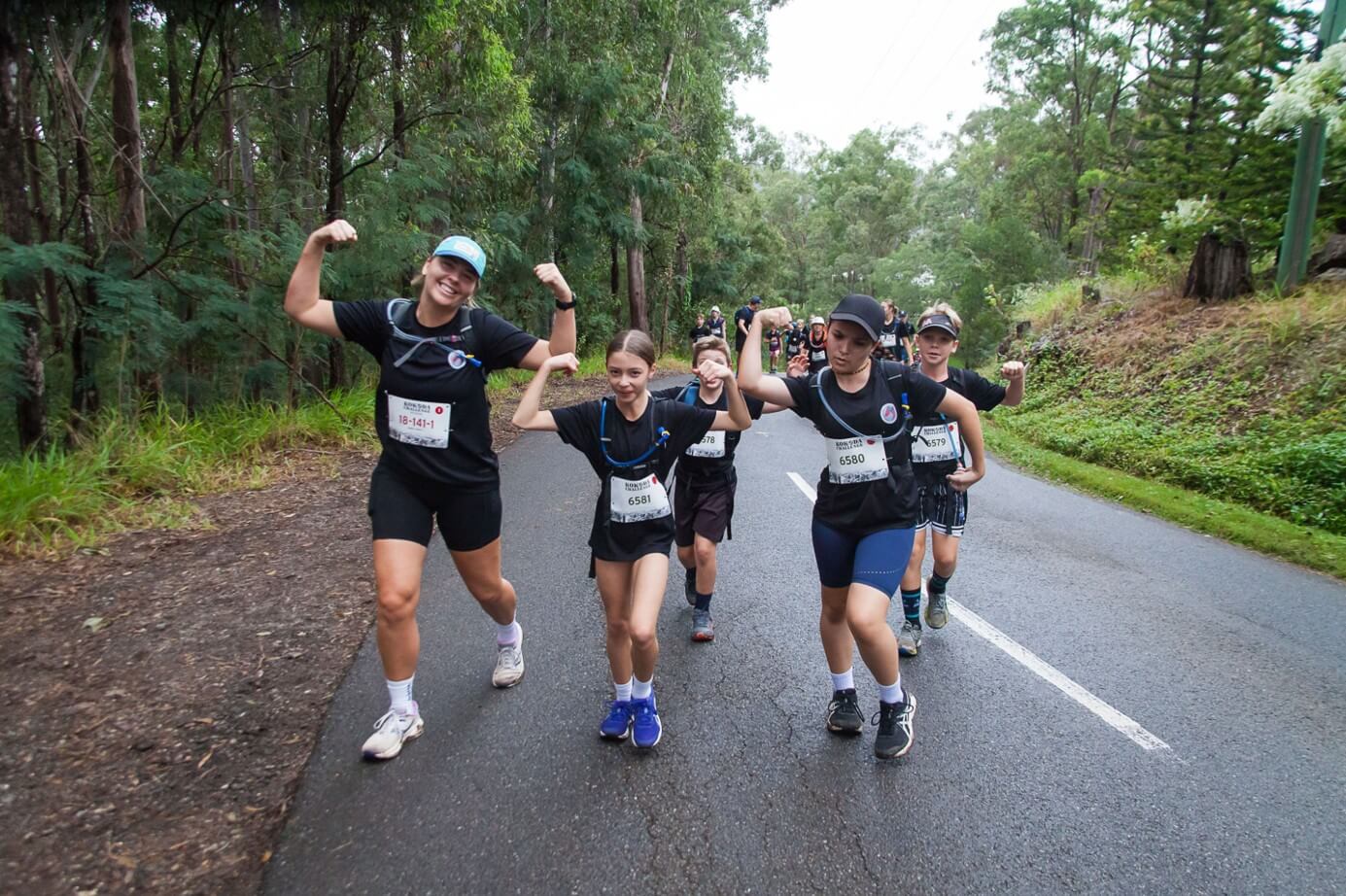
Schools looking for outdoor team building activities for students on the Sunshine Coast have many options. The region’s environment allows schools to move beyond classroom exercises and into structured, group-based physical experiences.
Trail-Based Team Challenges
Students work together to complete a set distance across coastal or hinterland trails. These activities require pacing, communication, and shared responsibility.
Hiking and Endurance Experiences
Group hiking programs introduce measurable goals such as distance, elevation, or checkpoints. Teams must manage energy levels and support one another to finish together.
Adventure-Based Programs
Obstacle-style activities and structured outdoor circuits combine problem-solving with physical movement.
Community-Based Challenge Events
Some Sunshine Coast programs bring multiple schools together in organised, supervised events that focus on teamwork, resilience, and shared achievement.
Outdoor physical team building activities for students create visible teamwork because progress depends on cooperation.
Team-Based Challenge Events
For schools looking beyond one-day activities, structured team-based challenge events offer a different level of engagement. These programs combine physical effort, teamwork, and a clear shared objective within a supervised event format.
Unlike classroom exercises or isolated camp activities, challenge-based formats require students to prepare, commit, and complete a measurable goal together. Teams often train or set expectations beforehand, which strengthens accountability before the event even begins.
Organised team challenge events allow schools to:
- Enter student teams across year levels
- Participate in professionally managed outdoor events
- Work toward a shared finish line
- Build team identity within a larger community setting
Because completion depends on cooperation, students experience teamwork in real time. Pacing, encouragement, and shared responsibility become necessary, not optional.
The Perfect Team Challenge Event for Sunshine Coast Students
One example of a structured, team-based outdoor challenge available to Sunshine Coast schools is the Kokoda Challenge.
The event is designed for student teams to complete a set distance together, with success dependent on every team member finishing. Teams must stay together from start to finish, placing teamwork, pacing, and shared responsibility at the centre of the experience.
Structured challenge events such as Kokoda combine:
- A clearly defined course and finish line
- Team-based participation
- Professional event supervision
- A preparation period that builds commitment before event day
In addition to the physical challenge, student teams fundraise in support of the Kokoda Youth Foundation. This introduces a purpose beyond the event itself, encouraging students to work toward a shared community goal while developing responsibility and initiative.
Schools also compete in the Kokoda School Cups, where participation and performance contribute to inter-school recognition. This adds a broader team identity and strengthens school spirit across year levels.
For Sunshine Coast schools seeking outdoor team building activities for students that combine physical effort, structured teamwork, fundraising purpose, and inter-school engagement, challenge-based events provide a measurable and community-focused format.
Schools can explore participation options, distances, and year-level suitability through the Kokoda Schools program.

Bringing Team Building to Life on the Sunshine Coast
For schools seeking outdoor team building activities that combine physical effort, teamwork, and structured support, events such as the Kokoda Challenge offer a practical option. Students participate in teams, complete a set distance together, and rely on cooperation to reach the finish line.
Exploring structured team challenge opportunities on the Sunshine Coast allows schools to move beyond one-off activities and provide experiences that strengthen connection, leadership, and accountability in a meaningful way.

