

THE SPIRIT OF KOKODA
Our mission is to change the lives of Australian young people through the Spirit of Kokoda; Courage, Endurance, Mateship and Sacrifice. It was these four values that became the guiding pillars that grounded our diggers throughout the 1942 Kokoda Campaign.
These are the same values we instill into young people in our programs. and that will carry participants through the
Kokoda Challenge just as they carried the diggers through theirs.
THE HISTORY OF THE KOKODA CAMPAIGN
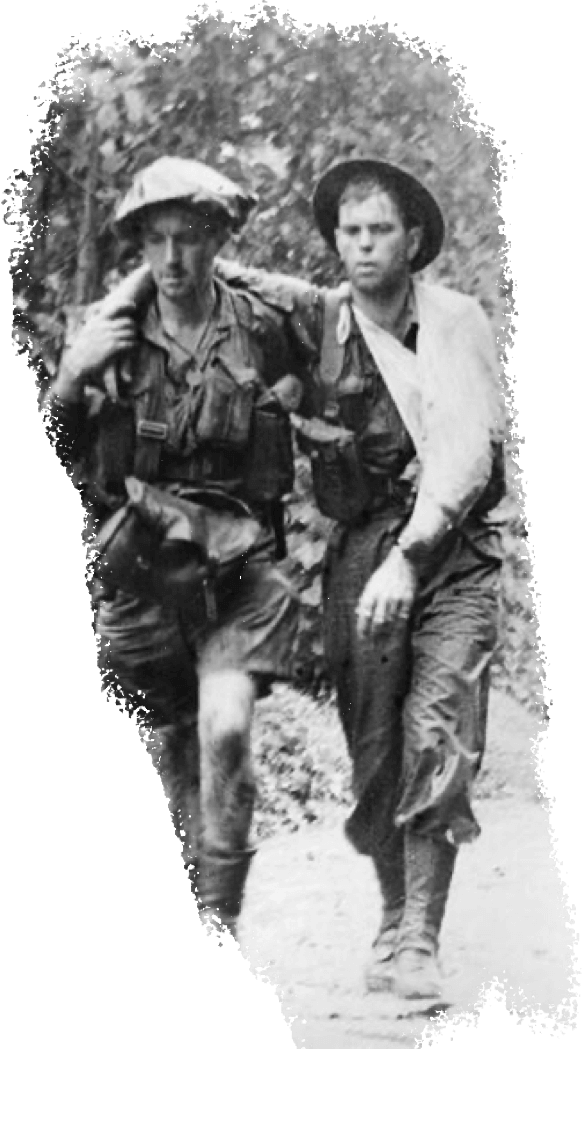
We will remember them. Lest we forget.
In 1942, the Japanese army tried to use this track to capture Port Moresby. Standing in their way were the young soldiers of the Australia's 39th Infantry Battalion and the Papuan Infantry Battalion. The first clashes happened near Awala buy the Australians were heavily outnumbered and forced to pull back.
The 2/14th Battalion arrived on the 26th of August 1942 to provide reinforcements and the Battle of Isurava was fought.
By mid-September, the Japanese had reached Imita Ridge, just 42km from Port Moresby and were finally within range of Australian artillery.
Suffering heavy losses and worn down by the conditions, the Japanese began to retreat. Australian forces pushed forward, recapturing Kokoda airfield on 2 November 1942. When they reached the Kumusi River on 18 November, the Kokoda campaign had come to an end.
In total, about 625 Australians were killed, over 1,600 were wounded, and thousands more became sick. Estimates suggest hundreds of Papuans died, though precise numbers are uncertain. The Kokoda Track remains a powerful symbol of courage, endurance, mateship and sacrifice.

The kokoda campaign: Battalions
The 39th Battalion
This Battalion was mostly made up of young Aussie men - many just 18 years old. They were first sent to PNG for labour work, but in June 1942 everything changed. They were ordered to move along the Kokoda Trail to stop the Japanese advance.
After tough fighting, the exhausted 39th were pulled back to rest, but within a month they were sent out again. This time, they joined the 21st Brigade to capture Gona village. They succeeded, but when they pushed on to Gona Mission, they were hit with heavy Japanese fire. The battles took a huge toll. The 21st Brigade was worn out, the entire D Company of the 39th was lost, and more brutal fighting followed along the coast. By the end of the Kokoda Campaign, only 32 soldiers from the 39th Battalion were still standing.
The 2/14th Battalion
This Battalion was the first unit in the 21st Brigade, made up mostly of Victorian soldiers. In 1941, they fought German forces in Syria and Lebanon and stayed in the Middle East until early 1942. They returned to Australia for a break - but it didn’t last long.
By August 1942, the 2/14th were sent to the Kokoda Trail to reinforce the struggling 39th Battalion. The fighting was so intense and after the battle at Imita Ridge, the 2/14th had lost so many men they had to merge with the 2/16th Battalion just to keep going.
When they fought at Gona in November, only three weakened companies remained. By January 1943, just 21 soldiers were left to walk out of Gona.
The 2/14th played a crucial role in the Kokoda Campaign and showed extraordinary courage under impossible conditions.
VETERANS OF THE 1942
KOKODA CAMPAIGN

All Kokoda Challenge event locations and distances have a 'School Cup' which is awarded to the fastest school team in each division. We also present the Bruce Kingsbury VC Fundraising Cup to the school that raises the highest funds for the Kokoda Youth Foundation that year. Each of these school cups are named after a Veteran who fought during the Kokoda Campaign in 1942 and their incredible stories are shared on our Schools Page.

